

What does winter injury look like on your lawn?
UNIVERSITY OF MINNESOTA EXTENSION - www.extension.umn.edu
The snowmelt is on and we are starting to see our lawns appear in western Minnesota. Lawns will start greening up as air and soil temperatures continue to rise over the next month. Impacts from winter stresses may become visible and there are a few general indicators to explain winter injury.
Snow mold
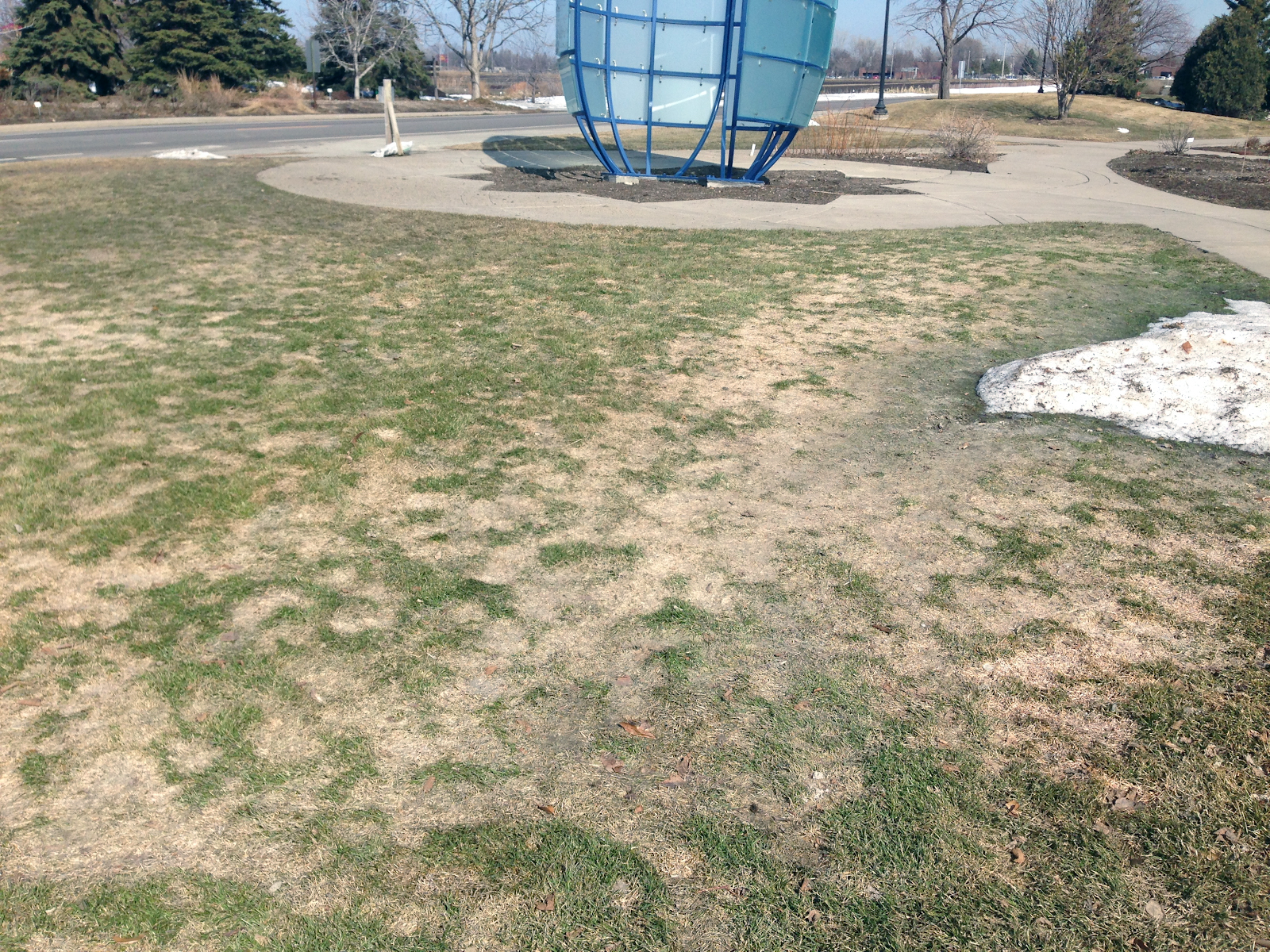
Snow mold on Kentucky bluegrass
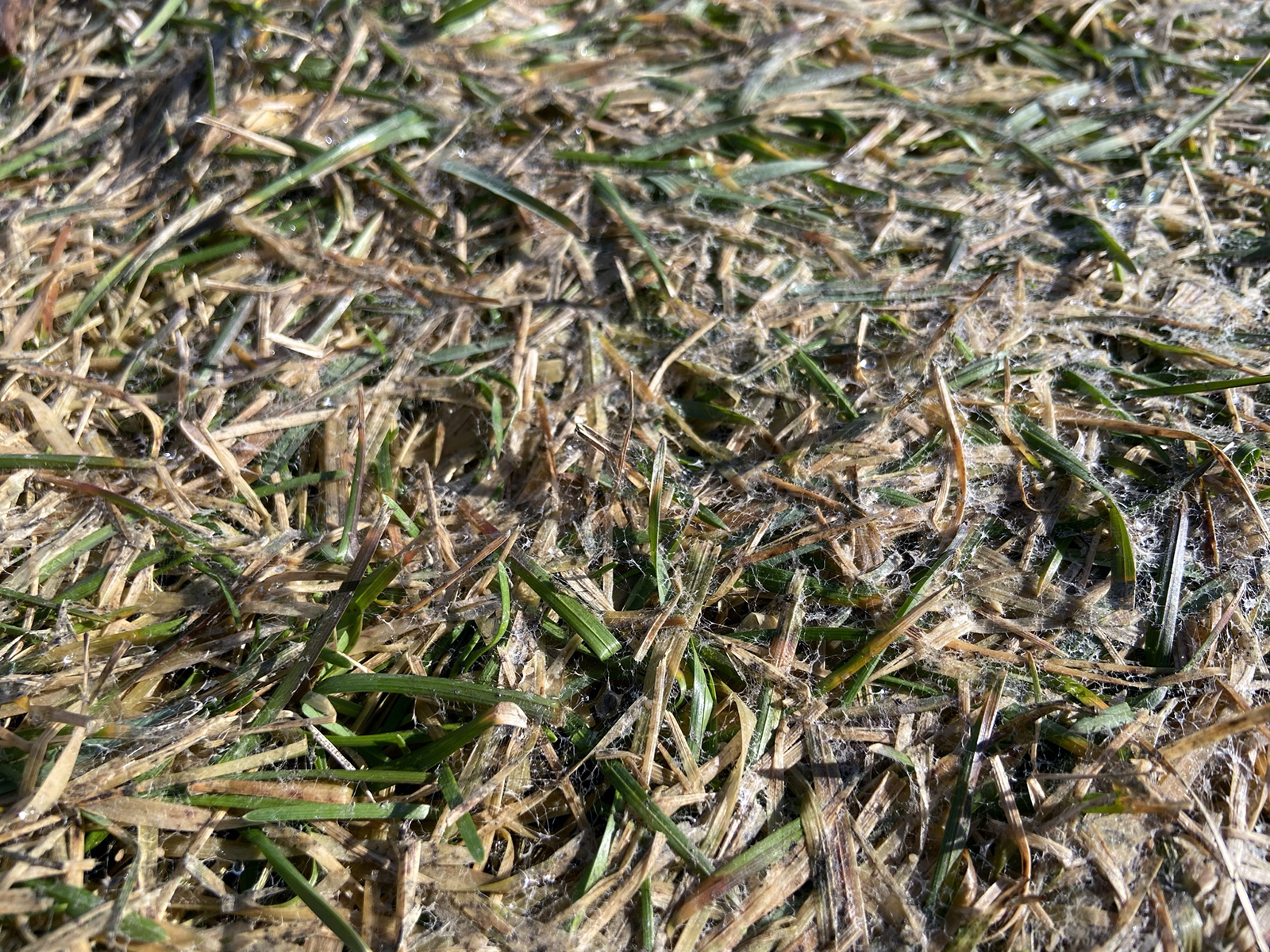
Close up of snow mold
What it looks like
Circular patches of matted, greyish grass that can be up to 3 feet in diameter. The image above shows several patches coming together to form an irregular pattern on the lawn. Close inspection can show white or pink fungal growth, called mycelium.
How to recover
Snow mold is a fungal disease that can be caused by 3 different pathogens (Typhula spp. and Microdochium nivale). All Minnesota lawn grasses can be affected, although fine fescue grasses are less susceptible. Snow mold disease damages grass leaves but usually will not kill the entire plant. To promote recovery, lightly rake these areas to fluff up the matted leaves.
Salt damage
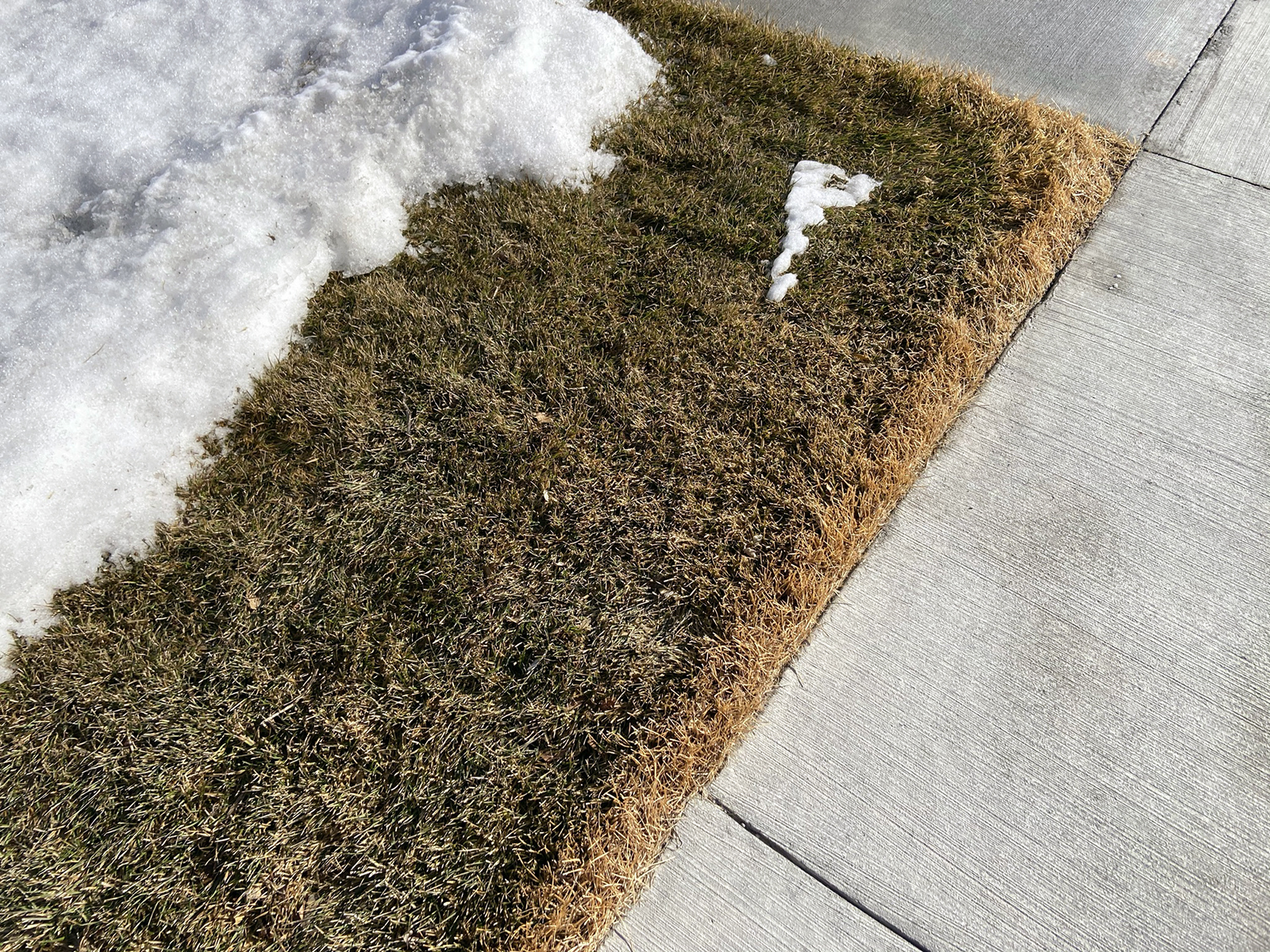
Salt damage from de-icing products applied to sidewalks over 3 months
What it looks like
Straw-colored grass next to hardscapes like sidewalks, driveways and streets. Damage will appear as a gradient with more intense damage at the edge of the hardscape and lessening damage toward the center of the lawn.
How to recover
Any vegetation can be injured by high salt loads. Research conducted on Minnesota roadsides has shown that establishing fine fescue areas will provide improved lawn quality under salt stress. Spring rains should help to leach salts from the soil. Next winter, consider using salt alternatives to minimize turf damage.
Areas that don’t green up
What it looks like
Some parts of your lawn will simply not green up, leaving dead grass and bare spots. Winter stresses are not well understood and turf loss could be due to many factors, including those described above, plus desiccation and ice cover.
Winter injury problems are more likely to occur in areas that did not have consistent snow cover, areas with poor drainage or standing water, and areas that received foot and equipment traffic.
How to recover
Repair these areas with seed or sod. We recommend fine fescues and tall fescues for lower-input lawns, and Kentucky bluegrass can be used for higher-maintenance lawns. Perennial ryegrass is often included in patch-and-repair mixtures but is not a good choice for Minnesota lawns because it is not winter hardy. Seed can be purchased from local and online retailers.
