

June garden checklist
UNIVERSITY OF MINNESOTA EXTENSION - www.extension.umn.edu
Mystery of the month
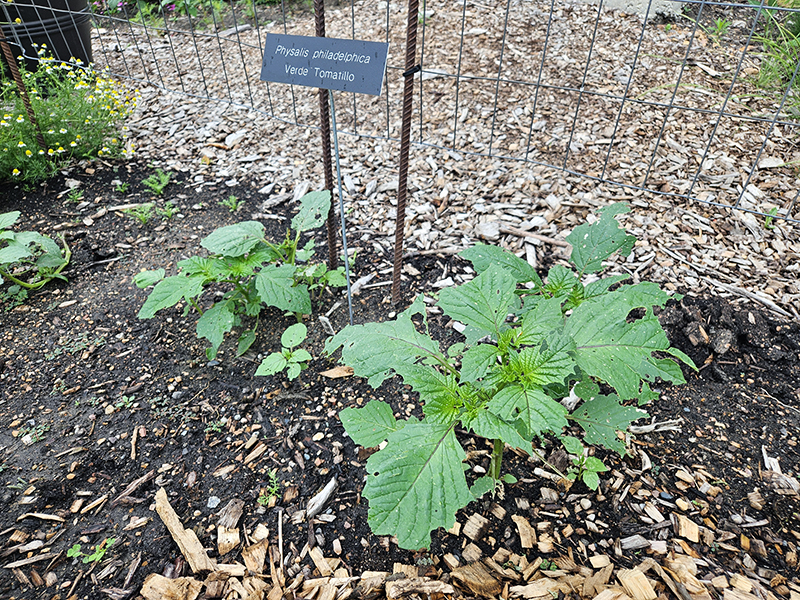
What is going on with these tomatillo plants?
The solution for what you should do is at the bottom of this article.
Pests and diseases
Look for sawfly larvae on trees and shrubs. Sawflies quickly defoliate a wide range of both deciduous and evergreen plants.
The best practice is to manually remove them as soon as you see them. You can flick them into a bucket of soapy water or crush them.
Trees and shrubs
Prune later-blooming spring-flowering shrubs in June. Spring-flowering shrubs should be pruned within two weeks after the flowers have faded.
Check out our list of commonly grown plants to prune after they are done blooming.
Flowers and other garden plants
Thin any direct-seeded plants that are getting crowded in your garden beds or containers. Many direct-seeded vegetables, like carrots and radishes, benefit from having room between plants. They will not compete as much for light, water, and nutrients when they are properly spaced.
This is also a great time to pinch-back some annual plants like zinnia, basil, and peppers. Many of the cultivars we grow benefit from having a bushier, more compact form.
Watch this Hort Short on pinching-back basil to learn more.
Houseplants
Move many houseplants outdoors for the summer. Do not put any in direct sunlight or expose them to intense winds right away. Slowly acclimate them to the outdoors by placing them in a shady, protected area for at least a few days, and gradually increase the amount of sunlight and air movement they get. This process is also called hardening off.
The instructions are the same as for moving seedlings outdoors, found on our starting seeds indoors web page.
Lawn
June is often a fantastic month for our lawns. Lawns typically will have ample moisture from rainfall and great growing temperatures. Every year is different, and it is a good idea to be adaptable.
Continue to mow as needed and pay attention to the weather.
- If June is relatively dry, do not mow drought or heat-stressed turf. If it rains frequently, do not mow the lawn until the grass leaves are mostly dry.
- If it is a really wet month and you aren’t able to mow for several days or weeks, try to take your lawn down in stages from the highest setting to your normal mowing height (we recommend at least 3.5 inches).
If the clippings are clumping up on the surface, you can collect them or use a leaf blower to scatter them out.
Other tasks
Plan your fall plantings now. If you planted spring crops or garlic that will be pulled in July, you can replant the bare areas for the remainder of the summer and into fall. For inspiration, look at our planting vegetables in midsummer for fall harvestweb page.
You can also plant a midsummer cover crop if you want to rest your garden bed for a season; the web page is geared towards vegetable farmers, but you can adapt it to smaller areas like a garden bed.
Solution to the mystery of the month
The damage may initially look like hail was the cause, but it’s best to check the entire plant before walking away.
If you look on the underside of the leaves, you will find the larvae of the three-lined potato beetle, as well as clusters of their orange eggs.
Physically remove them by either crushing or flicking them into a bucket of soapy water.

Three-lined potato beetle eggs

Three-lined potato beetle larvae
